On June 9th of 2021, Institute of Functional Nano & Soft Materials (FUNSOM) of Soochow University celebrated its 13th birthday. Over the past 13 years, all the members of FUNSOM have worked hard and forged ahead, and have continued to maintain high-quality development in discipline construction, team construction, scientific research, talent training, international cooperation, collaborative innovation and industrialization.
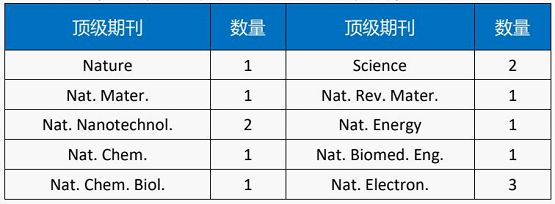
l Three papers have been published on Science and Nature as the communication unit. It has achieved new breakthroughs for Soochow University to publish scientific papers on Science and Nature.
- Metal-free efficient photocatalyst for stable visible water splitting via a two-electron pathway which was published on Science in 2015 was selected into “ten advances in Science of China in 2015”.
- In-plane anisotropic and ultra-low-loss polaritons in a natural van der Waals crystal which was published on Nature in 2018 was selected into “ten advances in Optics of China in 2018”.
- Constructive molecular configurations for surface-defect passivation of perovskite photovoltaics was published on Science in 2019.
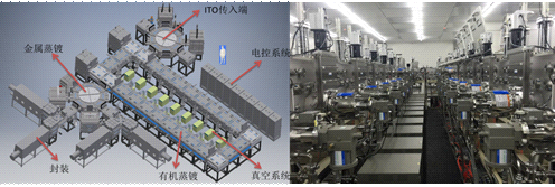
l The first G2.5 generation evaporation production line of OLED lighting was designed and manufactured independently in China, which passed the technical appraisal of Industry and Information Technology Department of Jiangsu in January 2020.
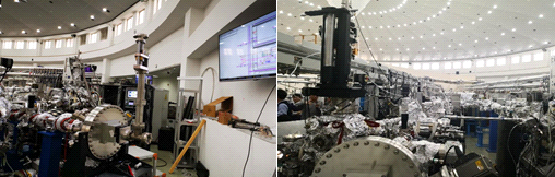
l Through cooperation with the National Synchrotron Radiation Laboratory from University of Science and Technology of China, the first synchrotron radiation line station with the title of “soft X-ray energy material in-situ analysis line station” was successfully accepted in November 2020 and officially opened to the outside world from 2021.
I. Discipline Construction
Materials science, nano science and technology and other disciplines were constructed dominantly in Soochow University.
In terms of materials science, it was selected into the national “double-first class” discipline in 2017. It ranked 16th in the world and 4th in China in 2021ShanghaiRankin’s Global Ranking of Academic Subjects. It ranked 17th in the world and 7th in China in 2020 U.S. News & World Report Best Global Universities Rankings.
In terms of nano science and technology, it ranked 5th in the world and 4th in China in 2021ShanghaiRankin’s Global Ranking of Academic Subjects. It ranked 4th in the world and 2nd in China in 2020 U.S. News & World Report Best Global Universities Rankings.
II. Team Construction
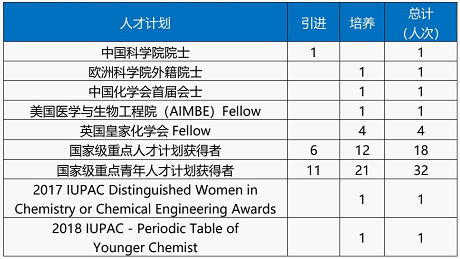
It included 1 National Science Found for Creative Research Groups, 1 Demonstration Base for Cultivation of Innovative Talents led by Ministry of Science and Technology, 1Innovation Team in Key Areas led by Ministry of Science and Technology,1 Innovation Team of China Overseas Chinese Contribution Award , and 11Provincial and Ministerial Innovation Teams.
III. Scientific Research
By May 2021, more than 2300 papers had been published, including 589 high-level papers.
By May 2021, 573 national and local projects had been obtained, with a total fund of more than 820 million yuan.
41 people were selected into the list of “Highly Cited Researchers” in the world, including Li Shutang, Liu Zhuang, Cheng Liang, Li Yanguang, Kang Zhenhui, Liu Yang, Wang Chao, Zhang Qiao, Chen Qian, Feng Liangzhu, Li Youyong.
There were 10 Deputy editors in ACS Nano, applied physics letters, biomaterials, Acta Physico-Chimica Sinica and other journals.
IV. Talent Cultivation
In 2010, College of Nano Science & Technology was established based on FUNSOM, and was approved as one of the first 17 “National Pilot Colleges” by Ministry of education in 2011. Under the talent training concept of all the staff education and the education management system of all-round service, the college took the lead in establishing a collaborative talent training mode of “the whole staff, the entire process and the overall direction”. In 2016, Nature reported the results of the college’s innovative talent training. In 2020, the college became the first college in the university to officially implement the integration of the Bachelor, the Master, and the Doctor. So far, FUNSOM and the college have cultivated more than 1700 nanotechnology talents.
V. International Cooperation
At present, it has established friendly and cooperative relations with 46 famous foreign schools or institutions in 22 countries and jointly cultivated 173 students..
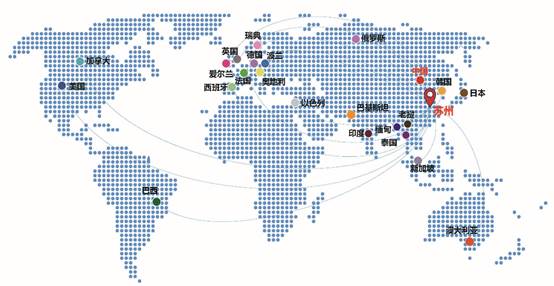
In 2016, the Discipline Innovation and Talent Introduction Base of Colleges and Universities, the International Cooperation Joint Laboratory led by Ministry of Education, and Jiangsu Foreign Expert Workshop were established. In 2019, the International Cooperative Training Project for Innovative Talents of NSFC was approved. In 2020, at the invitation of Ministry of Science and Technology, it became the Chinese leading unit of the BRICs Working Group on Materials Science and Nanotechnology.
VI. Collaborative Innovation and Industrialization.
In 2013, “Collaborative Innovation Center of Suzhou Nano Science and Technology” led by Soochow University and Suzhou Industrial Park and jointly established with five units, was successively identified as one of the first batch of Jiangsu Provincial collaborative innovation centers and the first batch of national “2011 plan” collaborative innovation centers. At the end of 2018, it was highly praised by the expert group at the on-site inspection and evaluation meeting from Ministry of Education. In 2020, in the performance evaluation of Jiangsu university collaborative innovation plan construction period organized by the leading group for construction of Jiangsu high-level university, it won the highest rank and rolling support from Jiangsu Education Department.
In July 2016, The Institute of Organic Optoelectronics (IOO) was jointly established by Jiangsu Industrial Technology Research Institute, the Wujiang Government of Suzhou and Prof. Shuit-Tong Lee and his team from FUNSOM. With a total investment of more than 360 million yuan, it was committed to the whole chain localization innovation of organic photoelectric materials, equipment, lighting and display products and testing instruments.